esotoノJournalノ
#02
The Water of Hakushu, the Sake of Shichiken | Seventeen Expressions
2026-07-13
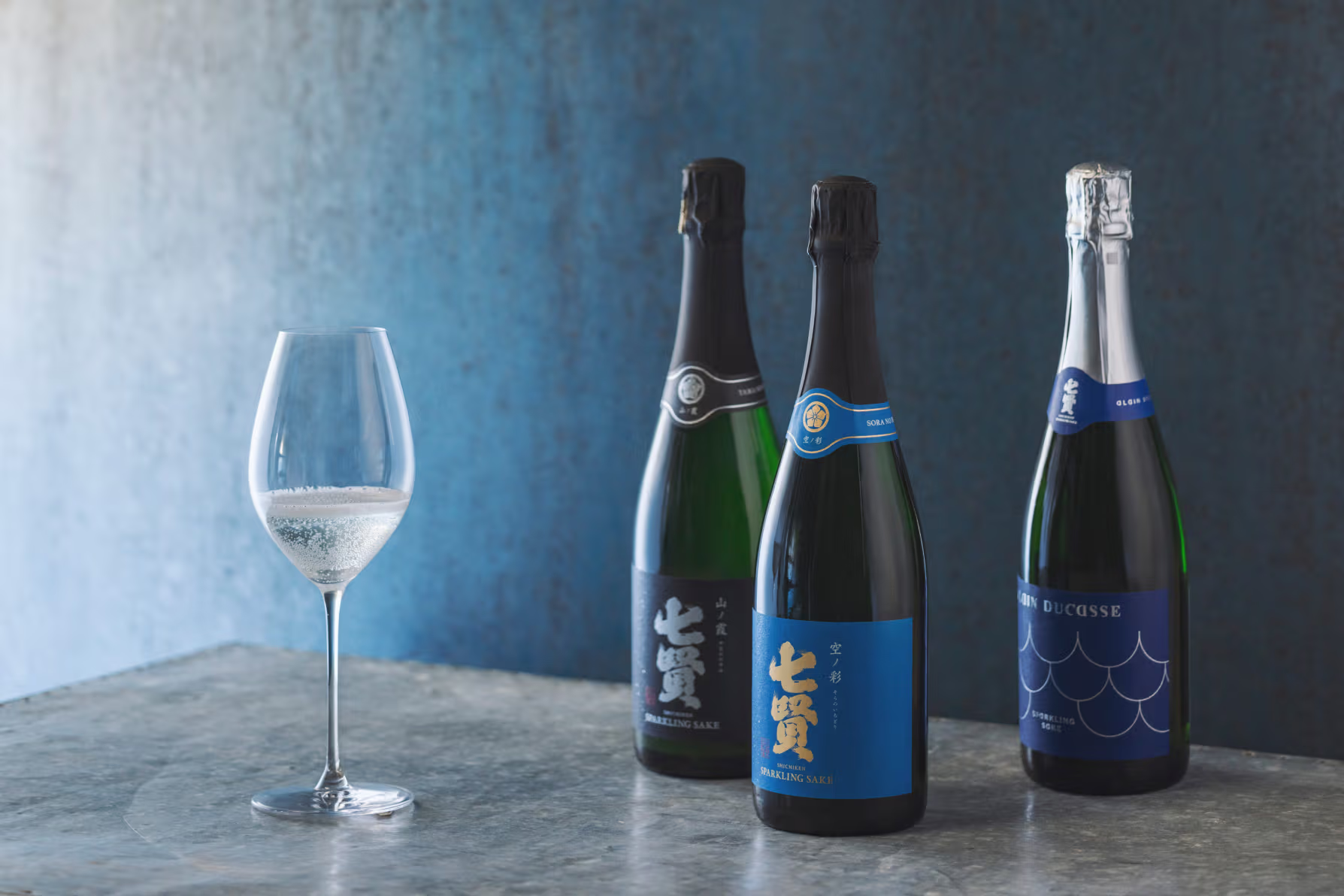
The Water of Hakushu, the Sake of Shichiken
Seventeen Expressions
At the table of Private Villa esoto, there is always a sake to accompany the moment.
Shichiken has been brewed here in Hakushu since 1750, in the third year of the Kan’en era.
The first-generation brewer, Ihei Kitahara, moved from Takato in Shinshu to Hakushu for one reason: he was captivated by the purity of the water that flowed through this land.
More than 270 years have passed since then.
Through thirteen generations, Shichiken has remained devoted to a single purpose:
to embody the pure water of Hakushu.
From this enduring pursuit come seventeen expressions of Shichiken. Each has a character entirely its own, yet beneath them all flows the same single source of water.
In this second Letter, we share the story behind Shichiken and introduce the distinct character of its seventeen expressions.
At the table of esoto.
Or within the sake brewery.
We invite you to enjoy these words as a quiet prelude to the glass you are yet to encounter.
WATER IS OUR ESSENCE
Everything Begins with the Water of Hakushu
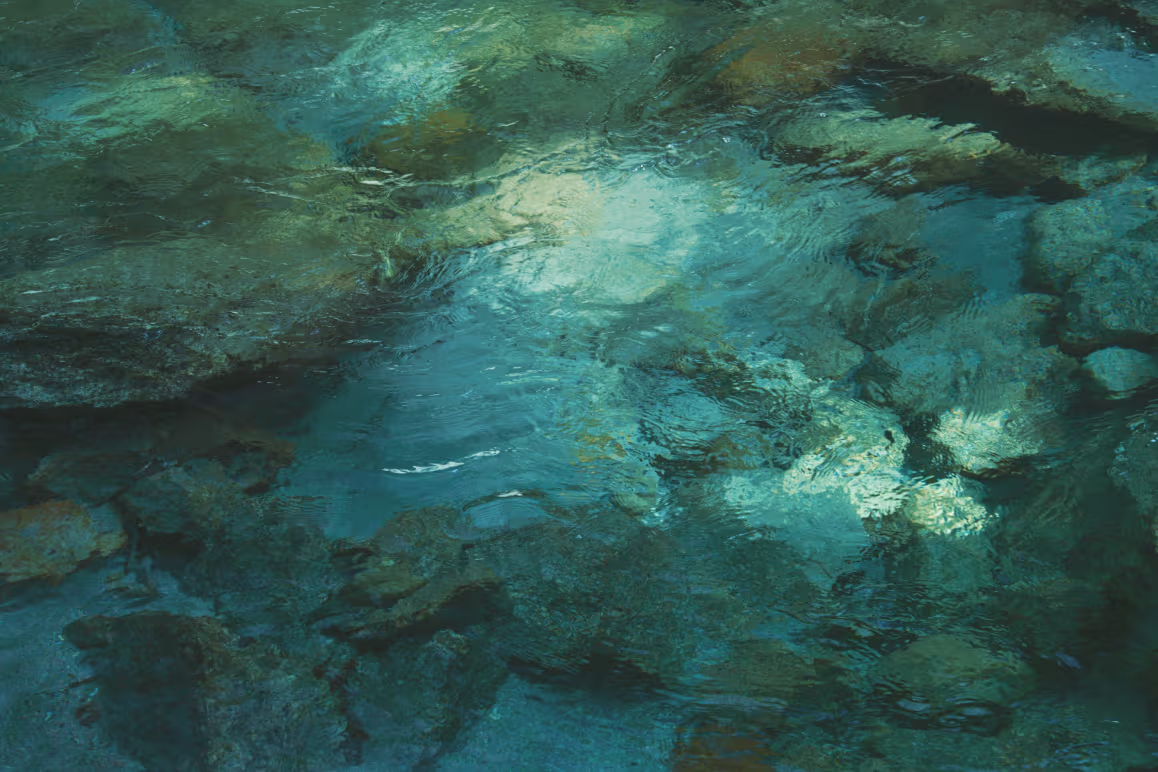
Rain and snow falling upon the slopes of Mt. Kaikomagatake in the Southern Alps slowly filter through layers of granite, making a journey of approximately 27 years.
At the end of that journey, the water rises again from beneath the earth.
This is the pure water of Hakushu.
Exceptionally soft water, with a hardness of approximately 20 mg/L.
Gentle on the palate, with a subtle sweetness.
The hardness of water reveals itself directly in the character of sake.
With soft water, fermentation progresses slowly, allowing the sake to develop a delicate texture and a gentle fullness that unfolds across the palate.
The quiet clarity found throughout Shichiken’s sake is, in many ways, the character of this water itself.
The reason the first generation chose this land, and the foundation from which the thirteenth generation now looks toward the world, are one and the same: the water of Hakushu.
THE SEVEN SAGES
A Name Inherited from the Seven Sages of the Bamboo Grove
The name “Shichiken” traces its origins to 1835, the sixth year of the Tenpo era.
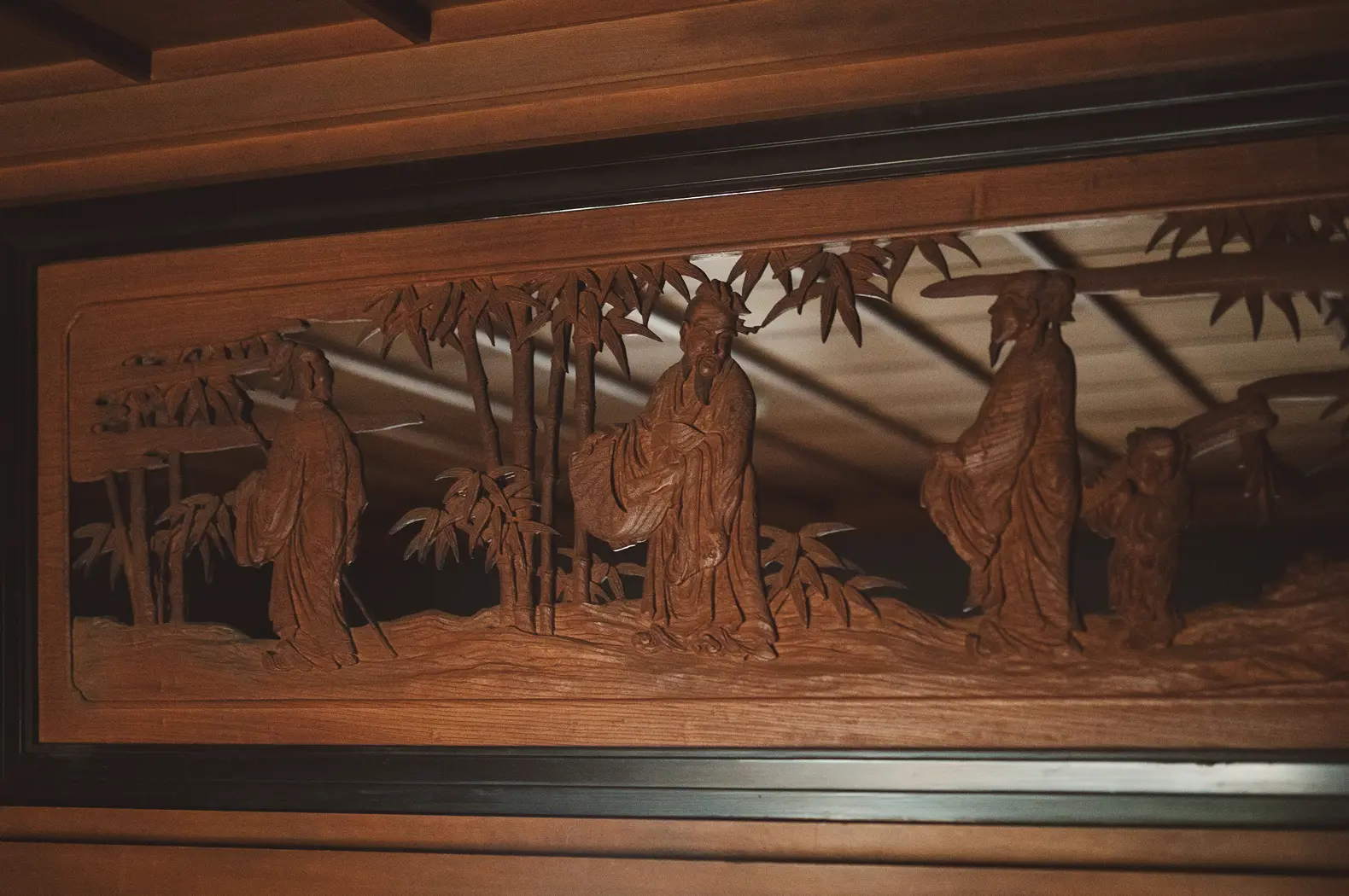
When the main residence was rebuilt, the lord of Takato Castle presented the family with a pair of carved transom panels depicting the Seven Sages of the Bamboo Grove.
The Seven Sages were a group of Chinese scholars who withdrew from the conventions of society during the Wei and Jin dynasties, gathering among bamboo groves to exchange ideas and enjoy philosophical conversation.
The sake that inherited their name has grown alongside the town of Daigahara ever since.
In 1880, during Emperor Meiji’s imperial tour, a room within the main residence was designated as a anzaisho—an imperial resting place. It was later recognised as a National Historic Site.
Today, that same historic residence lies at the heart of esoto.
To stay.
To taste.
To brew.
Nearly three centuries of time have quietly settled, layer upon layer, within this one town.
MAKE SPARKS
Fermented Once More, Inside the Bottle
It is said that around 70 percent of the world’s alcoholic beverages are consumed with carbonation.
Beer. Champagne. Highballs.
Where people gather around a table, bubbles have long been part of the occasion.
So where might sake find its place within that landscape?
Shichiken’s answer came in 2015 with the release of Yamanokasumi.
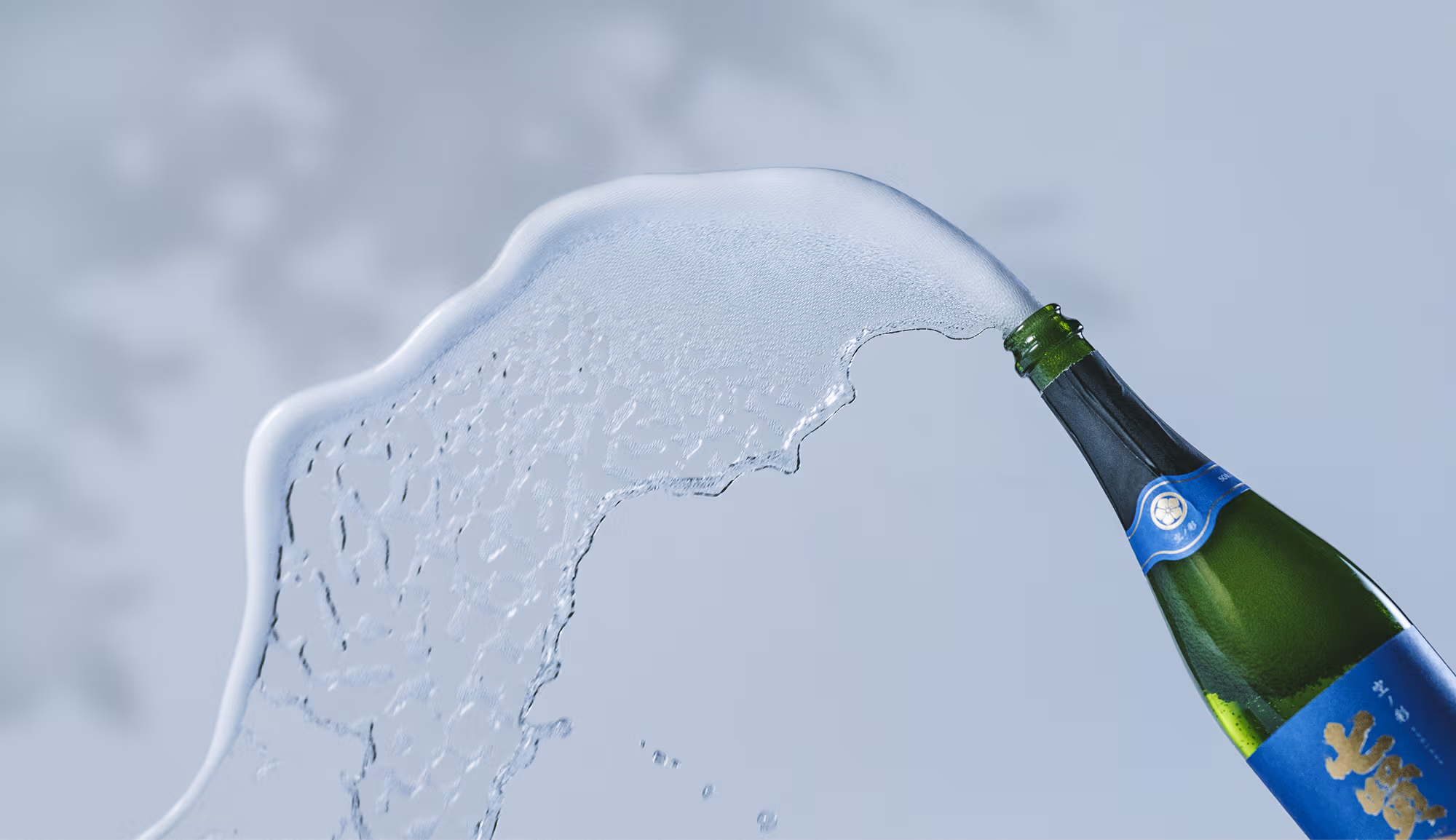
The method chosen was secondary fermentation in the bottle, the same principle used in Champagne.
After its primary fermentation, the sake is bottled and allowed to ferment once again within the bottle itself.
Shichiken also chose a non-dosage approach, adding no sugar after fermentation. The aim was not powerful effervescence, but fine, delicate bubbles and a remarkably clean finish.
It took five years of development.
After years of experimentation, a sparkling sake emerged with a delicacy that could only be born from the water of Hakushu.
Shichiken later collaborated with two leading figures in French gastronomy, Alain Ducasse and Gérard Margeon, to create sparkling sake for tables around the world.
MAKE SPARKS
Encounter the unknown, and create beautiful sparks.
True to those words, this nearly three-hundred-year-old brewery continues to create new sparks today.
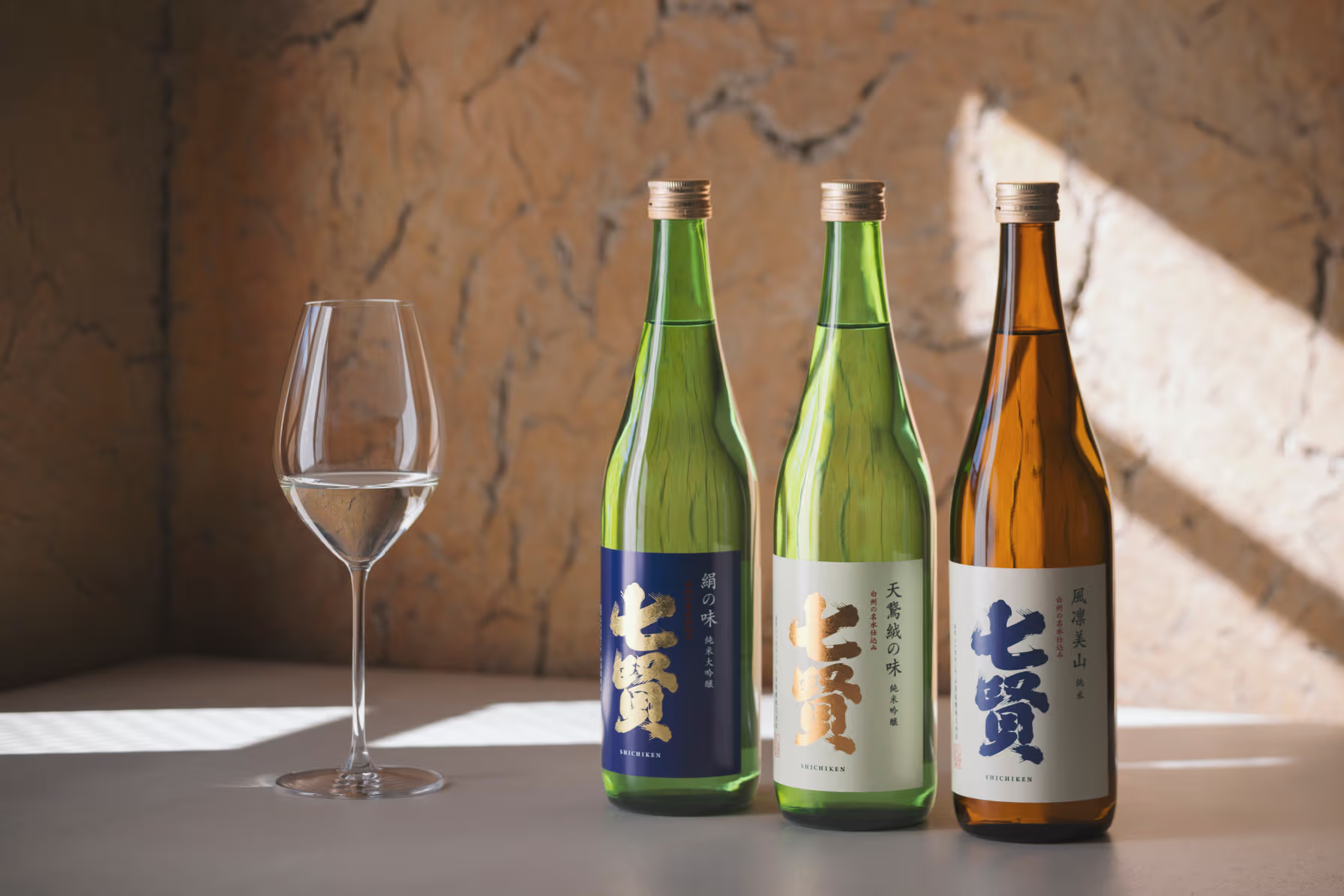
SEVENTEEN EXPRESSIONS
Seventeen Expressions, Born from One Water
From sparkling sake to honjozo.
From aged sake to shochu.
The seventeen expressions of Shichiken each reveal a remarkably different character.
And yet, beneath them all flows the same water—purified over a journey of 27 years.
At the table of esoto, a selection from these seventeen expressions awaits at the counter, chosen according to the season and the dishes being served.
No two evenings are ever the same.
The wind in Hakushu that day.
The ingredients of that season.
And you, on that particular evening.
For one party, and one night only, we quietly pour the sake chosen for that moment.
THE STORY CONTINUES
A Story That Begins with the Water of Hakushu
In the Letters to come, we will explore each of these seventeen expressions in greater depth—how each sake came to be, the character it carries, and the foods with which it finds harmony.
A long, unfolding story that begins with the water of Hakushu.
We hope you will join us as it continues.
Private Villa esoto / Yamanashi Meijo Co., Ltd.
Letter vol.02
The Water of Hakushu, the Sake of Shichiken | Seventeen Expressions